How to light a kitchen diner
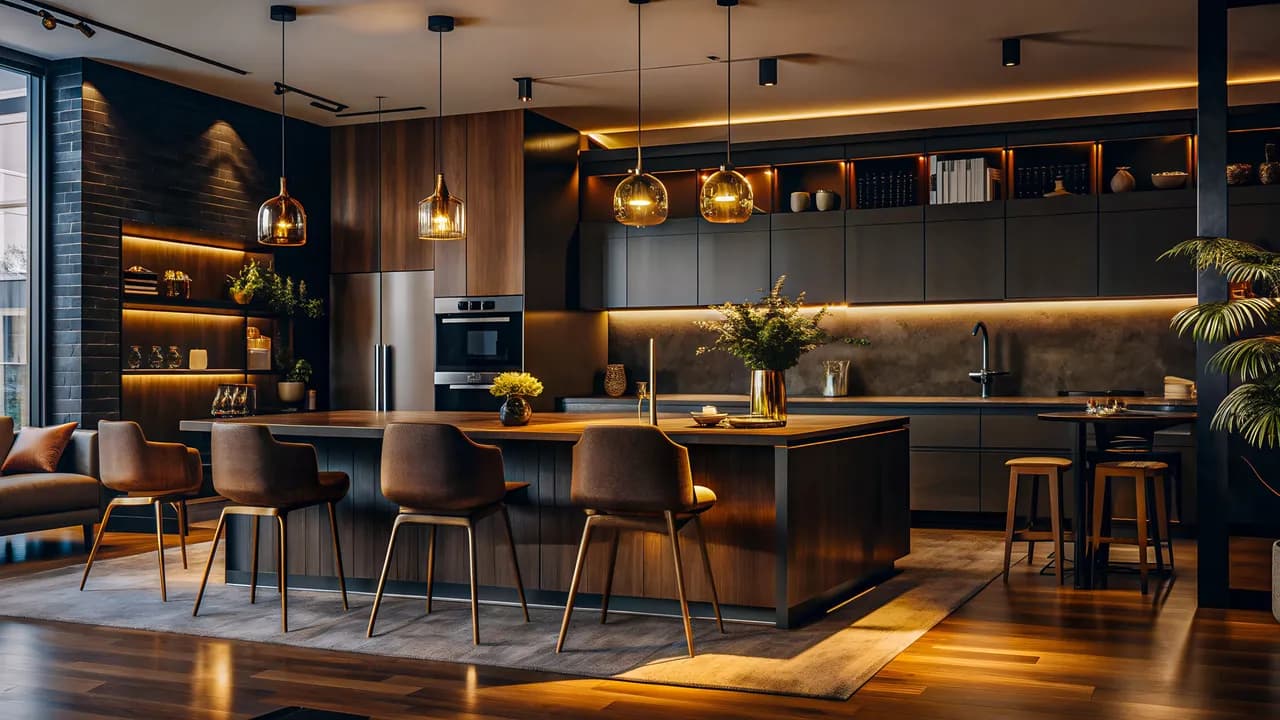
For many homes, the kitchen diner is the hub of the house where your customer prepares food, relaxes and entertains. Getting the lighting right for this multifunctional space is vital to adapt this room for its different uses.
Good lighting design
Good lighting will combine ambient, accent and task lighting to create a multilayered scheme that brings the space to life.
Lighting different areas
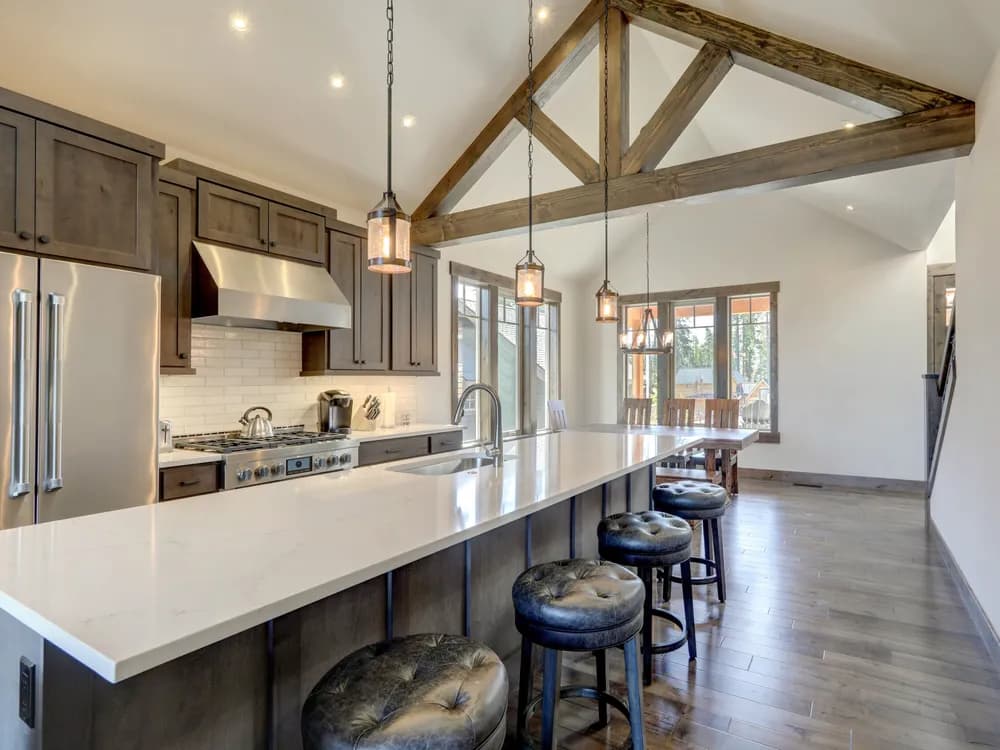
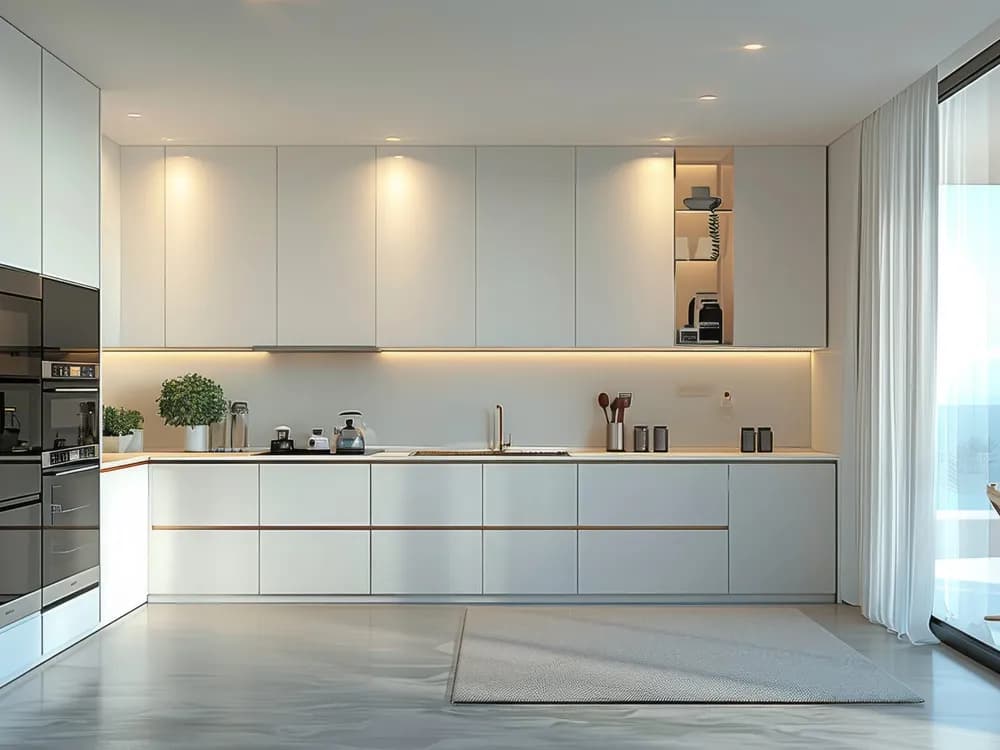
For the kitchen diner, spotlights are great for general ambient lighting. You can supplement this with task lighting for food preparation areas using both spotlights and under cabinet lighting. This focused task light, for example set under wall units to light directly onto a worktop, means that the user can see to prepare food without needing the main lighting too bright.
Pendants above an island or a dining table create a visual point of reference although it can be a good idea to supplement this light with some downlights or spotlights. Put the latter on a separate circuit, to provide a crisper, more intense light when needed or to highlight a feature, such as a vase of flowers on a table centre.
For large farmhouse style kitchens with sofas for relaxing in, consider wall lights, or suggest freestanding uplights or table lamps, so that they can be switched and dimmed with the other lighting.
Lighting control
Lighting circuits are important to create different zones within the space and to allow the dimming of different types of light so that your customer can adapt the room for multiple uses and create different moods.
Colour temperature
We respond emotionally to light and its colour and quality will directly affect the way we feel in a space. The correlated colour temperature is a measure of how a light source’s colour appears.
Depending on what your customer wants to achieve, you can install lighting that ranges from a very warm light of 2200K to a cool white light of 4000K. For the kitchen, or food preparation area, we would recommend using a cool white light of 3000K or 4000K to aid concentration.
For the dining area, which people use for everything from breakfast in the morning to a romantic meal in the evening, some modern LED fittings even allow you to change the colour temperature. If you install dim to warm lighting over the table fo0r example, your customer can adapt the lighting so that at 100% illumination the lighting is set to a white light with a correlated colour temperature of 3000K but when they dim this down to 10% and they will get a very warm relaxing white light of 1800K.
Download our Residential Lighting Design Guide
Lighting is an essential part of any home. Yet each room has different functions and needs.
Whether you are providing lighting for just one room or the entire house, you can use our residential lighting design guide to suggest how they can create stunning results.
Articles you may also like
These are articles we recommend that you also mind find interesting
Be the first to know the latest updates
Subscribe to our newsletter!
