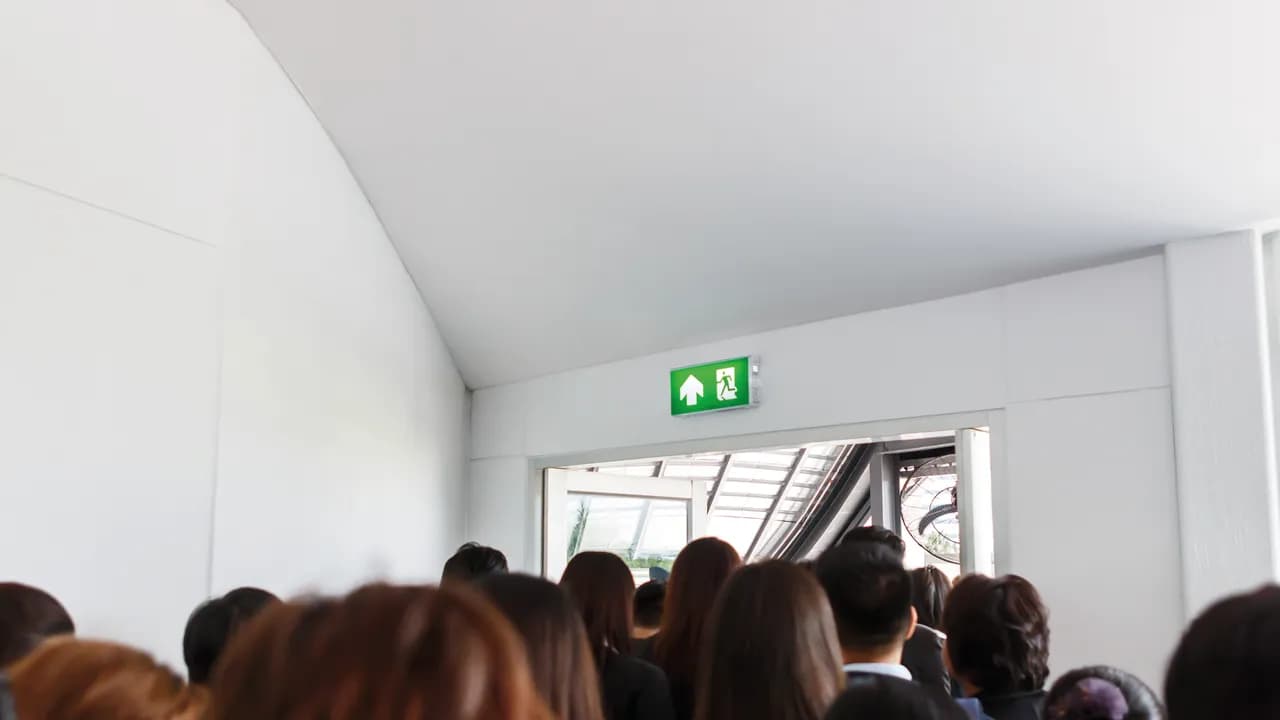
Demystifying emergency lighting solutions
By understanding what technologies are available you can make an informed choice and advise your customer on the most appropriate solution for their building based on a full risk assessment and understanding of how people will evacuate their space.
Download “A Specifiers and Installers Guide to Emergency Lighting” to make sure your customer has a fully compliant system.
Specifying the right solution
There are a number of different emergency lighting solutions in the market. Here we explain the different products and technologies available to you so that you can work out what system is best for your next project.
Exit signs
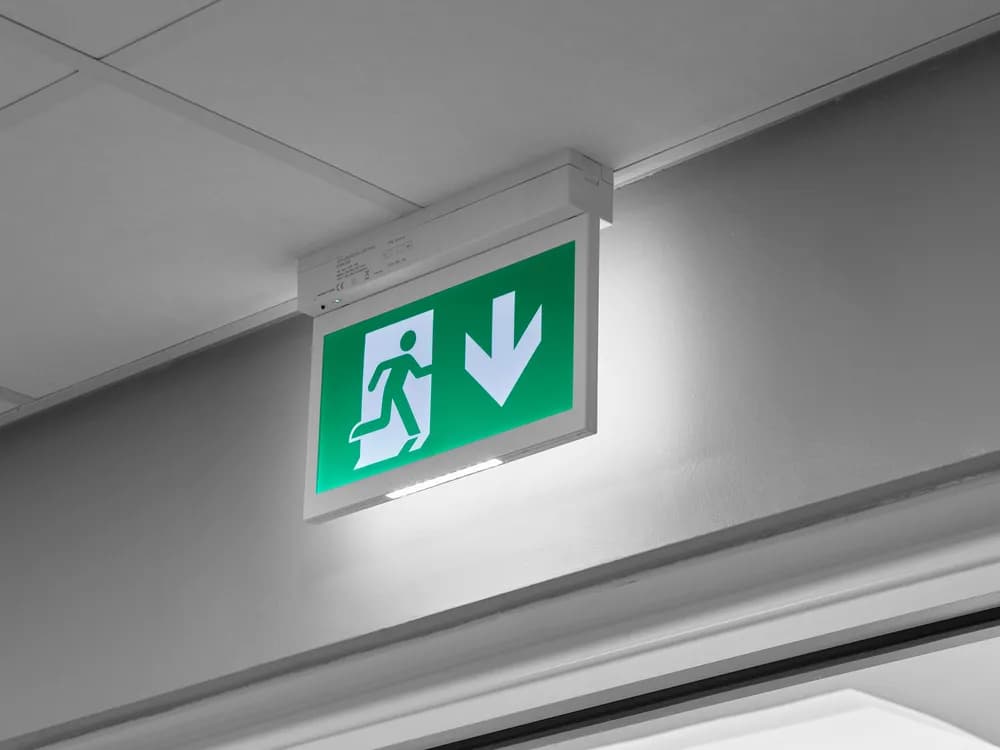
Exit signs show people where the fire exits are and how to get there safely. The pictogram of the well-known green man is backlit to provide luminance to EN 60598-2-22 and EN 1838. The signs need to be conspicuous, visible, legible and understandable, and the colours must also provide a contrast of between 5:1 and 15:1 so that they are clearly visible and understood.
There are different mounting options available for exit signage. You can install them on the wall, from the ceiling or even suspend them. You can also select single- or double-sided signage and specify different viewing distance specifications to suit numerous room sizes and applications.
Safety luminaires
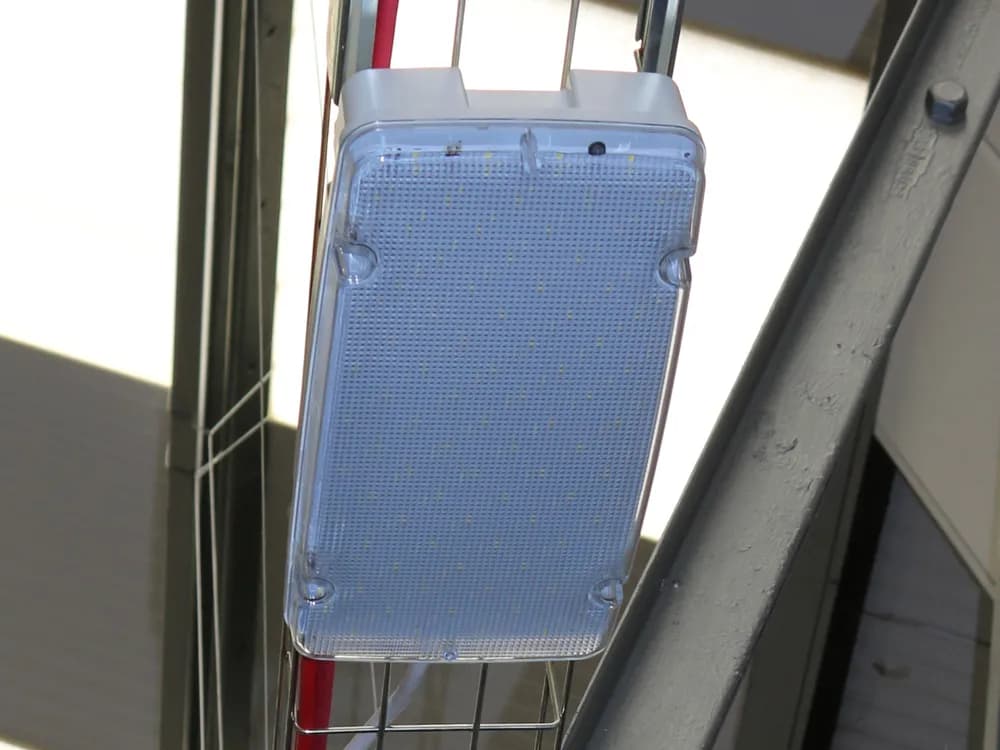
Safety luminaires are all in one units that light escape routes, open areas, or high-risk tasks if there is a power outage.
There are a number of options including:
Maintained or non-maintained?
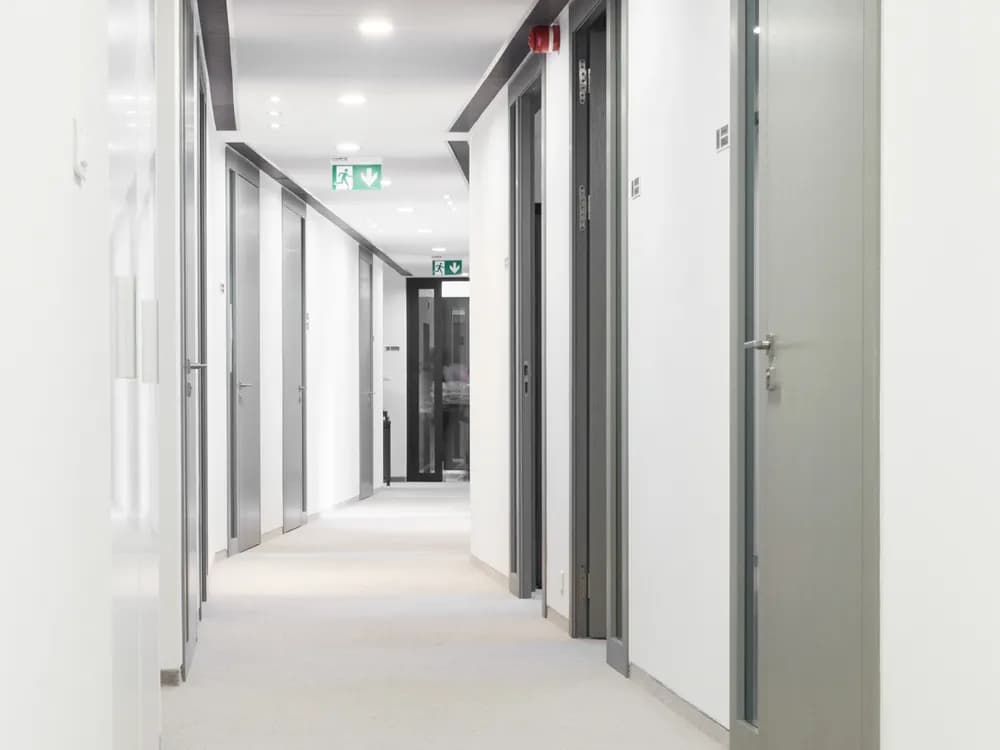
Maintained emergency fittings can be turned on / off when the mains power is on, so it can operate when the occupiers need either normal lighting or emergency lighting.
Non-maintained emergency luminaires will only switch on when a building’s power fails.
Manual or automatic testing?
Emergency lighting must be tested regularly to ensure that it still operates correctly. There are two tests, one for emergency light operation which should take place monthly, and an annual battery duration test. But note, both may need to take place more frequently depending on the facility and the risk assessor’s recommendation.
There are three ways of completing these tests; manually, a self-test or automatically using a DALI 2 system.
Of the three a manual test is the cheapest in capital cost, but an automatic testing solution will save time in the future and ensure that the testing is scheduled and completed.
Articles you may also like
These are articles we recommend that you also mind find interesting


Be the first to know the latest updates
Subscribe to our newsletter!
